Last Updated on 08/2026 by Mom Goes Camping
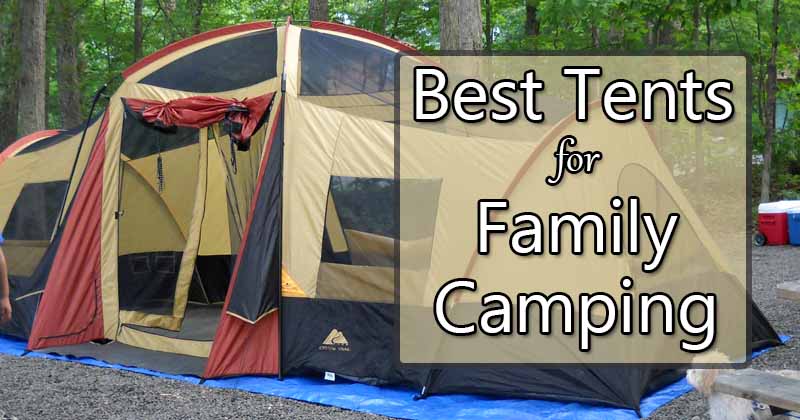
Looking for the best tent for family camping? The answer really depends on what type of camping you do with your family and how you will use the tent. Below I’ve listed the top family camping tents by type and their standout features.
Quick Picks:
- Best Overall: Eureka! Copper Canyon LX 8P – Two rooms, two doors, easy setup, holds up well in weather
- Best for Large Families: Core 12P Instant 3-Room – Three-room layout, instant setup, very affordable for the size
- Best for Family Backpacking: Eureka! Space Camp 6P – Just 16.1 lbs, two vestibules, withstands bad weather
- Best Budget Pick: Coleman Skydome 8P Dark Room – Blocks 90% of sunlight, sets up in under 5 minutes
- Best Value Cabin Tent: Wenzel Klondike 8P – Cabin-style headroom with a screened porch, without cabin-tent pricing
- Best for Fast Setup: Ozark Trail 10P Instant Cabin – Ready in about 2 minutes, great for camping with kids underfoot
- Best Premium Pick: Big Agnes Big House 6 – Just 16 lbs, 81 inches of headroom, splurge-worthy for calm-weather trips
Become a camping pro with printable Camping Cheat Sheets
Everything from packing lists to campsite setup, ready to print before you go. Download here →
Best Family Camping Tents
1. Eureka! Copper Canyon LX 8P Tent
Best Overall Family Camping Tent

The Eureka! Copper Canyon LX 8P is by far the most usable family tent. The usability is because the tent has two rooms, each with their own door. That gives you the flexibility to use one room as a hangout space or for gear storage and the other for sleeping. Or, because there are two doors, you can have people sleeping in each room without having to crawl over each other to get in/out. The tent is also very easy and fast to put up. With a durable construction and materials, you don’t have to worry about getting wet in this tent.
Notable Features:
- Two rooms and two doors
- 156×120 footprint size
- 84 inches of headroom and near vertical walls
- Fits 2 queen sized air mattresses or up to 8 campers on pads
- Massive windows and great ventilation
- Sturdy steel main pole with fiberglass secondary poles
- Storage pockets, E! PowerPort
2. Core 12P Instant 3-Room Tent
Best for Large Families
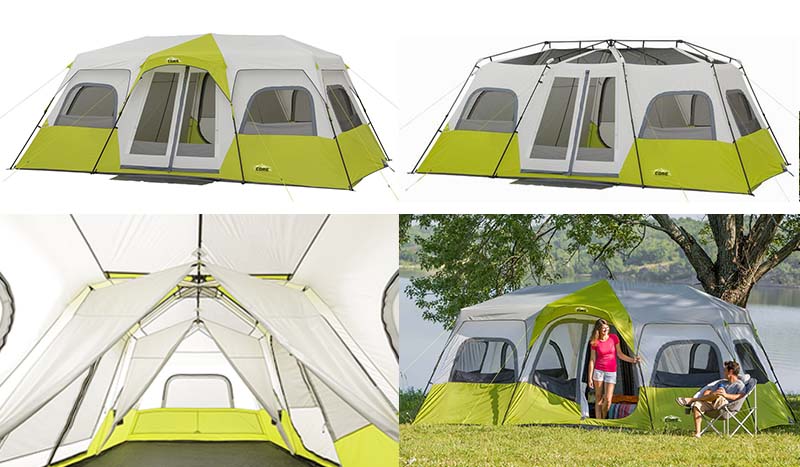
There are a lot of large tents, but few are actually set up in a way which makes sense for large families. The Core 12 is an exception. It has a really smart layout with three rooms: there is a center room and two bedrooms off to the side.
The room dividers are removable, so you have some flexibility in how you want to use the tent. You could easily fit 4-5 people on cots or pads in each bedroom. Or you could put a queen air mattress in each bedroom (with room to spare) and a twin cot in the middle room.
Because it is an instant tent, it is one of the fastest and easier family tents to pitch. Just bear in mind that instant tents tend to be weak. Be gentle when setting it up and taking it down and it will last a long time.
Notable Features:
- Very affordable large family tent
- Three rooms: one central room and two bedrooms to the side
- 18×10 feet
- 80 inches of headroom and near vertical walls
- Fits 2 queen sized air mattresses and a twin or up to 10 people on pads
- Instant setup in 5 minutes
- Storage pockets, vents, E! PowerPort
3. Eureka! Space Camp 6P
Best Tent for Family Backpacking

At 120×100 inches, the Eureka! Space Camp 6P tent can actually fit six campers in it. The pole construction creates near-vertical walls so you can actually use the space near the sides of the tent.
There are two large vestibules and doors, so storing your gear won’t be an issue either. It is designed to withstand bad weather and has aluminum poles. The fly and floor material are a bit thin, but this is what allows the tent to get down to an impressively low 16.1lbs. Only the Big Agnes Big House 6P tent (see #7 below) comes close to this weight but it doesn’t have vestibules.
Notable Features:
- Weighs just 16.1lbs
- Two doors and two vestibules
- 120×100 inches
- Adjustable ventilation
- Very durable construction
- Withstands bad weather
- Vestibule turns into awning
- Lots of storage pockets
4. Coleman Skydome 8-Person Dark Room Tent
Best Budget Pick
[NEEDS PRODUCT IMAGE – upload to media library and replace this placeholder]
For families who want a genuinely spacious tent without the premium price tag, the Coleman Skydome Dark Room 8P delivers. The Dark Room technology blocks 90% of sunlight, which is a game-changer if you have little ones who nap or wake up with the sun. It sets up in under 5 minutes thanks to pre-attached poles, and the nearly vertical walls give you 20% more headroom than a standard dome tent.
Notable Features:
- Blocks 90% of sunlight and reduces interior heat
- Sets up in under 5 minutes with pre-attached poles
- 12×9 ft footprint, 76 inches of headroom
- Frame tested to withstand 35 mph winds
- WeatherTec tub-style floor and welded corners
- Fits 2 queen air mattresses
5. Wenzel Klondike 8-Person Cabin Tent
Best Value Cabin Tent
[NEEDS PRODUCT IMAGE – upload to media library and replace this placeholder]
If you want cabin-tent headroom without cabin-tent pricing, the Wenzel Klondike is hard to beat. It’s a classic two-room layout: a 98 sq ft main room plus a 60 sq ft screened-in porch you can use as a gear room, sun shelter, or overflow sleeping space. At 6.5 feet of headroom, most adults can stand up straight.
Notable Features:
- 16×11 ft footprint: 98 sq ft main room + 60 sq ft screen room
- 6.5 ft (78 in) peak height
- Full mesh roof and two mesh windows for ventilation
- Fiberglass frame with reinforced corners for wind stability
- 10-year manufacturer warranty
- About 27 lbs
6. Ozark Trail 10-Person Instant Cabin Tent
Best for Fast Setup
[NEEDS PRODUCT IMAGE – upload to media library and replace this placeholder]
If pitching a tent with kids underfoot sounds like a nightmare, this is your tent. Pre-attached steel poles mean it’s genuinely ready in about 2 minutes — unfold it, extend the legs, done. It’s not the most weatherproof tent on this list, so it’s best suited for fair-weather car camping rather than a rainy weekend.
Notable Features:
- Sets up in about 2 minutes with pre-attached poles
- 14×10 ft footprint (140 sq ft)
- 78 inches of headroom
- LED lighted poles for hands-free lighting at night
- Fits 2 queen air mattresses with room to spare
- Best for casual, fair-weather camping trips
7. Big Agnes Big House 6
Best Premium Pick
[NEEDS PRODUCT IMAGE – upload to media library and replace this placeholder]
This is the splurge option, and it’s genuinely a different category of tent. At just over 16 lbs, it’s dramatically lighter than every other tent on this list despite its huge 83 sq ft footprint and 81-inch peak height — tall enough for most adults to stand fully upright. The trade-off is weather performance: the rainfly doesn’t fully cover the doors, so it’s not the pick for a rainy or windy trip unless you add the accessory vestibule (sold separately).
Notable Features:
- Just 16 lbs 7 oz — far lighter than comparable cabin tents
- 81 inches of peak height, near-vertical walls
- 83 sq ft floor area
- Backpack-style carry bag
- Best for calm-weather trips; vestibule sold separately for better weather protection
Choosing a Tent for Family Camping
There are lots of different ways to go family camping, so it’s no surprise that there are also lots of different types of family tents. The options can seem overwhelming. However, if you ask yourself these 8 questions, you’ll be able to narrow the options down to the perfect family tent for your needs.
1. How Many Rooms Do You Need?
When choosing a tent, most people first look at the size. Really, they should be looking at how many rooms they need. Most families will need at least a two-room tent. One room is used as an entranceway or porch for storing gear. If it is large enough, you can even hang out in there during bad weather. The second room is used for sleeping.
2. Tent Size
Once you’ve established how many rooms you need, you can calculate how big the sleeping area of the tent needs to be.
- If sleeping on pads, you will only need about 80×25 inches per person, which comes out to approximately 14 square feet per person.
- If sleeping on air mattresses, you will need a lot more space. A twin mattress is usually 76×38 inches and a queen mattress is 80×60 inches.
Don’t forget to add an extra 6-12 inches of space around the sides of the tent. Otherwise you will end up right against the tent wall, which can cause condensation problems and leakage in the rain. You may also want to add some extra space for walking between each pad or mattress.
For more info, read: How Big Does a Family Tent Really Need to Be?
3. Type of Tent
There are four main types of tents used for family camping:
- Cabin Tents
- Tunnel Tents
- Dome Tents
- Modified Dome Tents
Each tent type has its own pros/cons. For example, cabin tents have better headroom but don’t withstand windy weather very well. Dome tents are better suited for bad weather but tend to be cramped inside.
For more, read: Types of Camping Tents (with Pictures)
4. Number of Doors
Having an extra door can really improve the functionality of a tent. For example, some two-room tents have a separate door for each room. This means people can enter/exit the rooms without bothering people in the other rooms.
5. Ease of Pitching
If you are going to be camping at the same spot for a long time, the ease of pitching won’t matter as much. But, if you mostly go for weekend camping trips, you will want a tent which is fast and easy to pitch.
Here are some of the factors which affect ease of pitching.
- Size: In general, larger tents are much harder to pitch than smaller tents.
- Weight: Some large family tents weigh more than 50lbs and are a pain to carry to the pitch site.
- Height: Short people might not be able to reach the top of the tent when pitching.
- Freestanding or not: Some tents have guylines which need to be completely staked out whereas others are freestanding and will stay up even if the guylines aren’t staked out.
- Type: Certain types of tents, such as tunnel tents, are usually much more difficult to pitch than other types.
- Pole clips vs. sleeves: It can be incredibly annoying and time-consuming to push poles through sleeves. Tents which clip onto the poles are faster and easier to pitch.
6. Weather Resistance
You obviously don’t want a tent which will start leaking on you in the rain. However, weather resistance isn’t just about rain. Depending on the conditions, you may also need a tent which will withstand wind and hot sun (such as a dark room tent).
Another weather factor that people overlook when choosing a family tent is condensation. Family tents without ventilation often have problems with condensation buildup, which can make the tent wet even in dry weather. You’ll need a tent which has features like mesh roof panels and air vents you can open.
Also read: How to Solve Tent Condensation
7. Extra Features
Before choosing a family tent, decide on what features really matter to you. Some features to consider are:
- Storage
- Power cord access (power port)
- Windows
- Lantern hooks
8. Price
Cheap family tents usually start around $150 and can go up into the thousands. If you aren’t sure which type of tent you need, it’s probably better to start with a cheaper tent. Take the cheap tent for a few camping trips to see what you like about it and what you don’t. Better yet, rent or borrow a tent from someone (Read: Etiquette of Borrowing Camping Gear). Then you will know exactly what you want when it comes time to invest in a better quality tent.
Best Family Camping Tents FAQ
How much should I spend on a family camping tent?
Budget tents start around $150-200 and work fine for occasional summer trips. If you camp several times a year or want better weather resistance, expect to spend $250-400. Premium ultralight options like the Big Agnes Big House run $450+.
What size tent do I need for a family of four?
A 6-person tent gives a family of four comfortable room for gear and movement. If you’re using air mattresses instead of sleeping pads, size up to an 8-person tent since mattresses take up significantly more floor space.
Are instant tents worth it for families?
Yes, especially with young kids in tow. Instant tents trade some durability and weather resistance for genuinely faster setup, which matters a lot when you’re also unloading a car and managing children at the same time.
Image credit: “DSCN0249” (CC BY-NC-SA 2.0) by Lenny Flank


