Last Updated on 10/2026 by Mom Goes Camping
How to Plan Your First Camping Trip with Kids: A Mom’s Guide
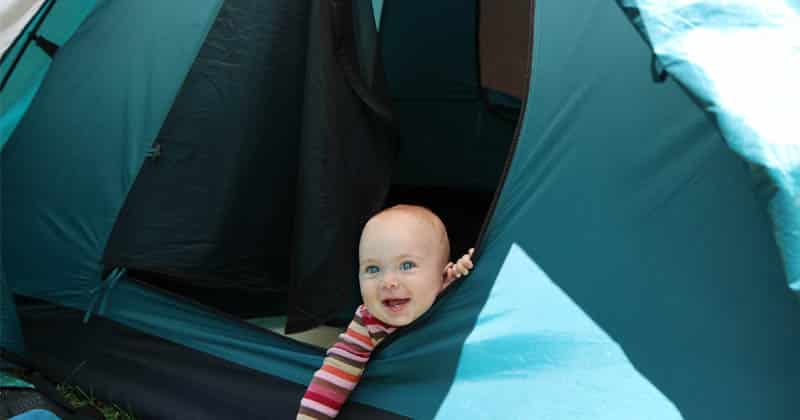
The first time I took my daughters camping overnight, I spent two weeks beforehand convinced it was going to be a disaster. My youngest was eighteen months old. My oldest was four. I had no idea if they’d sleep in the tent, what would happen when the toddler inevitably melted down at bedtime, or whether I’d packed enough food, the right gear, or any of the things I was sure I was forgetting.
Here’s what actually happened: the toddler screamed for forty-five minutes at bedtime. My older daughter woke up at 5:30am sure it was morning. The camp stove took three attempts to light.
And by day two, both girls were filthy, sun-kissed, and asking if we could stay forever.
That was eight years ago. We’ve been going back every summer since.
Planning your first camping trip with kids isn’t complicated, but it is different from planning any other kind of trip.
The things that matter most aren’t the things most packing lists focus on.
This guide covers everything I wish someone had told me before that first trip: how to pick the right campsite, what to pack, how to handle sleep, what to feed everyone, and what to actually expect so you’re not blindsided by the normal stuff.
Step 1: Lower Your Expectations (Seriously)
Before anything else: your first camping trip with kids is a practice run, not a peak experience. The goal is to come home having figured out what your family needs, not to have a perfect trip.
Here’s what’s completely normal on a first trip:
- Kids wake up earlier than usual. Tents heat up fast in the morning and light comes in from all sides. 5:30-6am wake-ups are very common, especially for toddlers.
- Bedtime takes longer. New place, new sounds, new everything. Give yourself 30-45 extra minutes and don’t fight it.
- Something gets forgotten. It happens to everyone, every time. The packing list helps but doesn’t prevent it entirely.
- Toddlers will be overwhelming. The lack of routine is exciting and destabilizing at the same time. They’ll hit a wall.
- The weather will surprise you. Too hot, too cold, or unexpectedly rainy. Plan for it and it’s manageable.
None of this means you’re doing it wrong. It means you’re camping.
My rule after our first trip: go home having had at least one moment where you thought this is why we do this. One moment is enough. Everything else is just logistics.
Step 2: Choose the Right Campsite for a First Trip
For your first camping trip with kids, the campsite matters more than almost anything else. This is not the time for backcountry adventure. Start with a developed campground, one with drive-up sites, bathrooms, and running water.
Here’s what to look for:
What makes a good first campsite?
A flat, shaded site. Shade keeps the tent cooler in the morning and afternoon. A flat site means nobody rolls off their sleeping pad at 2am.
Short walk to the bathroom. You will make this walk at 2am with a half-asleep child. The shorter that walk, the better your night goes.
Drive-up access. Park next to your site, unload directly. “Walk-in” sites require carrying gear from a parking lot. Skip those for now.
Loop or pull-through sites. Easier to set up, easier to leave early if you need to.
Stay close to home. For your first trip, within an hour or two is ideal.
If something goes wrong, and something usually does, you can be home quickly without the trip feeling like a failure.
Where to book
- recreation.gov – national forest and national park sites
- Your state parks website – often better availability and cheaper
- Hipcamp – private campgrounds, more amenities, easier booking
My best research tip
Before you book, search the site number plus campground name on Google Images.
Other campers post real photos showing what the site actually looks like: shade, neighbor proximity, ground conditions. It’s far more useful than the official listing photos.
Step 3: Figure Out the Sleep Setup First
Sleep is the single most important logistical decision you’ll make for a camping trip with kids. Get it right and you have a fighting chance. Get it wrong and nobody’s happy by day two.
The sleeping pad matters more than the bag
Most parents obsess over sleeping bags and ignore sleeping pads. Cold comes up from the ground, not down from the air. A kid with a warm sleeping bag and no insulating pad will be cold all night.
The pad insulates them from the ground and, just as importantly, keeps them on a surface instead of rolling onto the cold tent floor.
For kids: look for a kids-sized pad (narrower than adult so they stay centered), R-2 or higher for summer, R-3+ for spring or fall.
Sleeping bags by age
Toddlers under 3: A wearable sleeping bag with sleeves is the best option, they can’t wriggle out of it at 3am. The Morrison Little Mo is the one I always recommend.
Ages 3-7: A kids-specific sleeping bag rated 10-15°F below the expected low temperature.
Big Agnes makes excellent kids bags that include a pad sleeve, the pad slides inside the bag so kids can’t roll off it. That feature alone is worth the price.
Ages 8+: A standard adult bag in a smaller size. A 20°F bag covers three-season use for most climates.
Dressing kids for sleep
Put them in dry, clean layers, not the clothes they wore all day. Base layer plus a light fleece works for most three-season camping. Add a hat for cold nights, kids lose a surprising amount of heat through their heads. If they wake up cold, add layers before assuming the sleeping bag isn’t warm enough.
The rolling-off problem
If your kids keep ending up on the cold tent floor, here are three fixes: get a sleeping bag with an integrated pad sleeve, put rolled-up clothes as bumpers on each side of the pad, or cover the entire tent floor with pads so there’s nowhere to roll off to.
Step 4: Set Up Your Tent Before the Trip
Practice setting up your tent at home before you go.
In the backyard, in the living room, anywhere, just do it once before you arrive at the campsite. You don’t want to be reading the instruction manual in the dark with tired kids circling you.
A few tent setup tips that will save you:
- Lay a tarp or footprint under the tent. Protects the floor and keeps ground moisture out from below. Cut it slightly smaller than the tent footprint so rain doesn’t pool under it.
- Point the door away from prevailing wind. Walk the site and feel which direction the breeze is coming from. Wind hitting the door means cold air every time someone unzips at night.
- Set up the tarp over the picnic table first. Do this before you need it, not when it starts raining.
- Keep shoes in the vestibule. This one habit keeps most of the dirt outside the tent.
Step 5: Plan the Food (and Keep It Simple)
The best camp cooking strategy is make-ahead and foolproof. You’ll be tired when you arrive. The kids will be hungry and overstimulated. This is not the time for ambitious meals.
The first night rule
Make night one’s dinner stupid easy: hot dogs on sticks, pre-made chili from a can, grilled cheese. You just drove for however long with kids, set up camp, and survived. Save the good meals for night two when everyone’s settled.
Make-ahead meals that actually work
- Breakfast burritos: Scramble eggs with cheese, sausage, and potato at home. Roll in foil. Freeze flat. They double as ice packs in the cooler and reheat directly on the camp grate.
- Marinated proteins: Chicken or steak already marinated in a zip-lock bag. Dump straight on the grill at camp.
- Foil packet meals: Assemble at home (potato, chicken, vegetables, butter, seasoning), cook directly on coals at camp. Zero dishes.
- Pancake mix: Measure the dry ingredients into a jar at home. Add wet ingredients at camp.
The emergency dinner
Always pack a backup meal that requires only boiling water: instant mac and cheese, a can of soup, ramen. Something you can make in five minutes when everyone is tired and nothing went to plan. I’ve used mine more times than I can count.
Food storage
Keep all food in a hard-sided cooler or bear box when not in use, even at developed campgrounds. Never leave food in the tent. This includes toothpaste and sunscreen. Lock everything scented in your car overnight.
Camping with Toddlers: What’s Different
Toddlers deserve their own section because camping with a 1-3 year old is genuinely a different experience than camping with older kids.
What toddlers actually need at camp
Not much.
A toddler at a campsite will entertain themselves with rocks, sticks, dirt, and puddles for hours.
The hardest part isn’t keeping them entertained, it’s keeping them safe and managing the lack of routine.
What works well:
- A basin of water with some cups = 45 minutes of entertainment minimum
- Stick and rock collecting, don’t fight it, embrace it
- Watching the campfire from a safe distance, genuinely mesmerizing
- Their normal food from home, familiar food at a new place reduces mealtime meltdowns
What’s hard:
- Bedtime. Toddlers pick up on “this is different” immediately. Start the bedtime routine earlier than usual, keep it identical to home (same books, same songs, same lovey), and expect it to take longer.
- Supervision. Toddlers require eyes-on at all times at camp, near the fire, near water, near roads, near neighboring sites. Choose your campsite with this in mind: avoid sites directly on main campground roads, and look for natural boundaries.
- Nap timing. If your toddler still naps, camp naps are unreliable. Build in downtime at the tent even if they don’t sleep.
Sleep for toddlers at camp
The biggest mistake I see is parents trying to get toddlers to sleep in an adult sleeping bag. It doesn’t work, they wriggle free and end up cold and awake at 2am.
Use a wearable sleeping bag with sleeves. It’s the single gear decision that makes the biggest difference for under-3s.
For true toddlers still in a crib at home, a pack-n-play inside the tent works well for the first few trips. It gives them a familiar sleep space in an unfamiliar environment.
Camping with School-Age Kids: What’s Different
Kids ages 4-10 are honestly the sweet spot for camping. Old enough to do things, young enough to be delighted by everything.
What works especially well:
- Give them real jobs: stakes, sleeping bags, setting up chairs. Kids who help build the camp are invested in it.
- Short hikes with snacks at every landmark. The snack is the destination.
- Nature scavenger hunts, a list of things to find (pine cone, smooth rock, something yellow, an animal track) is an afternoon of entertainment.
- Their own headlamp. This is the single best gear decision for school-age kids, having their own light source removes so much nighttime anxiety.
What’s harder than you’d expect:
- Boredom window between activities. Build in unstructured time explicitly: set out the magnifying glass, bug jar, chalk, small shovel, and walk away. Most kids will invent something within 20 minutes.
- Keeping the pace slow enough. School-age kids can do more than you think on hikes, but “more” often turns into tired and cranky by evening. Build in rest.
What to Pack: The Essentials
This is not a comprehensive packing list, get the full printable checklist here.
But here are the things that matter most:
Sleep system (highest priority):
- Kids sleeping pad, kids-sized
- Kids sleeping bag appropriate for the temperature
- Toddler wearable sleeping bag if under 3
Lighting:
- Headlamp for every family member, kids especially, it’s the single best gear upgrade for nighttime anxiety
- Camp lantern
Kitchen:
- Two-burner camp stove + propane
- Hard-sided cooler
- Collapsible water jug
Safety:
- Kids’ sunscreen SPF 50+
- Insect repellent (picaridin is gentler on kids than DEET)
- First aid kit
What to Expect on Your First Night
Bedtime will take longer than usual. Plan for it. Start the routine 30-45 minutes earlier than at home. Keep it identical to your normal routine, same books, same songs, same stuffed animal. The familiar routine in an unfamiliar place is the anchor.
Kids may wake up during the night. New sounds, new smells, new everything. A calm headlamp-on and quiet reassurance is usually all it takes. By the second night they’ll sleep better.
Early wake-up is almost guaranteed. Tents get light and warm fast. Have a plan: coffee ready to go, headlamps for the kids, something quiet they can do while you fully wake up.
Something will go wrong. This is not pessimism, it’s just camping. Something gets forgotten, the stove is harder to light than expected, someone has a meltdown. These are not signs the trip is a failure. They’re the stories you’ll tell later.
Your First Camping Trip Checklist
Before you go, run through this:
- Campsite booked with bathrooms nearby, drive-up access, flat and shaded
- Tent practiced at home at least once
- Sleeping pads and bags ready and rated appropriately
- Night 1 dinner planned and stupid easy
- Breakfast burritos made and frozen
- All headlamps charged, one per person
- First aid kit checked and restocked
- Kids’ normal bedtime items packed (books, lovey, white noise if needed)
- Food and scented items plan for overnight storage
- Emergency contact and campground address saved offline
Ready to Go Deeper?
If you want to take the planning further, the Your Family’s First Camping Trip bundle includes everything in this guide plus:
- A complete printable packing checklist by category
- A day trip itinerary (structured timeline, toddler + school-age tips)
- A 2-day first overnight itinerary
- A 3-day itinerary for when you’re ready for more
Get The Complete Bundle For 50% Off →
Your First Camping Trip with Kids FAQ
How do I prepare my toddler for their first camping trip?
The most important thing is keeping their sleep setup as close to home as possible. Use their normal bedtime routine (same books, same songs, same lovey), bring a wearable sleeping bag they can’t wriggle out of, and give them a headlamp they can control themselves. Most toddlers handle the camping environment better than parents expect, they’re distracted by the novelty during the day, and the routine anchors them at night.
What age is good for a first camping trip with kids?
There’s no minimum age, I’ve camped with babies, toddlers, and every age since. Younger kids (under 2) are actually often easier than toddlers because they’re less mobile and more portable. The hardest age is often 18 months to 3 years: old enough to be everywhere, not old enough to understand rules. If that’s where your kid is, start with a one-night trip close to home and set expectations accordingly.
What should I cook on my first camping trip with kids?
Night one: hot dogs, pre-made chili, or grilled cheese. Something that requires minimal prep and has nothing to go wrong. Night two, once everyone is settled: foil packet meals, breakfast burritos reheated on the grate, or whatever sounds good. Always pack an emergency dinner (instant mac and cheese + soup) that requires only boiling water.
Do kids need a special sleeping bag for camping?
Yes. Don’t put kids in an adult sleeping bag, they’re too wide, too long, and toddlers will wriggle out of them and end up cold and awake at 3am. Get a kids-sized bag rated 10-15°F below the expected overnight low, and pair it with a kids-sized sleeping pad. The pad is actually more important than the bag, cold comes up from the ground, not down from the air.
Diane Vukovic has been camping with her daughters since they were babies. She runs momgoescamping.com, where she writes about family camping, backpacking, and outdoor gear.