Last Updated on 08/2026 by Mom Goes Camping
If you want to get started dehydrating your own backpacking meals, pasta sauce is a good place to start. There are a zillion ways to make pasta sauce for backpacking, and most recipes are impossible to screw up.
Read more about backpacking meals below:
Here’s one basic recipe to get your started.
Guess what? I wrote an eBook. It’s got over 50 calorie-dense recipes for backpacking plus tons of info on meal planning. Get it here. 
Makes: 4 Servings
*This makes enough sauce for about 400 grams of dry pasta. Assuming that you eat 100g of pasta for dinner (at 371 calories per 100g dry pasta), that comes out to 475 calories total for your dinner. Add some olive oil, olives, cheese, etc. and you’ve easily got a 600 calorie dinner – which is perfect after a long day of hiking.
Weight and Calorie Breakdown:
Once the ingredients are dehydrated and TVP added, the sauce weighs 132 grams/4.65 ounces. That breaks down to:
- Total calories: 418
- 2 calories per gram
- 90 calories per ounce
Admittedly, this isn’t the most caloric-dense backpacking food (I usually strive for at least 120 calories per ounce). But you can increase the caloric density by adding a splash of olive oil to the pasta. I carry olive oil in a little plastic bottle with me. Food tastes better when it has fat on it too!
Ingredients:
- 1/3 zucchini (100g) = 17 calories
- 1/2 cups tomato paste (130g) = 137 calories
- 1 cups TVP (80g) = 264 calories
- Salt, herbs, spices (I used an Italian spice blend)
Instructions:
At home:
- Blend the zucchini and tomato paste into a puree. You might need a splash of water to get it going. Spread the blended puree on a couple small pieces of parchment paper.
- Put the parchment papers on your dehydrator trays.
- Dehydrate until completely dry. It should snap when you bend it and no moisture should come out when you squeeze it.
- Crumble the dry zucchini and tomato paste into a zip baggie.
- Add the TVP, salt and seasonings to the bag. You are now done!


On the trail:
- Cook your pasta until it is al dente. Then remove from the stove. Expert tip: Presoak pasta before cooking to save fuel. It also helps you gauge how much water you need for cooking.
- Check how much water is remaining in the pot. There should be enough to rehydrate the sauce. If there is too much water, the sauce will be runny! Remember that the TVP will absorb a lot of the water, so you’ll need to leave a bit more water than you think you need.
- Add the sauce ingredients to the pasta.
- Cover the pot and let it sit for 5-10 minutes.
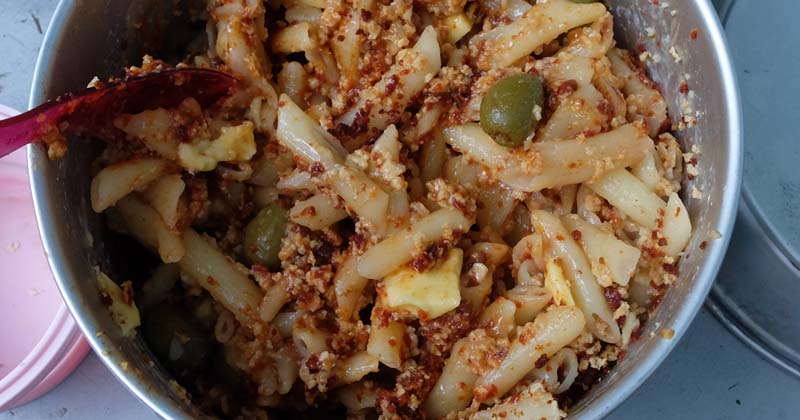
- Gourmet add-ins: I added some hard cheese and olives to the pasta to make it even tastier. Olive oil also makes it taste even better.
- Enjoy!


TVP Backpacking Recipe FAQ
What is TVP and why is it good for backpacking?
TVP stands for Textured Vegetable Protein it’s dehydrated soy protein that rehydrates quickly in hot water and adds a meat-like texture to trail meals. It’s lightweight, shelf-stable for years, cheap per ounce, and packs in more protein per gram than most trail foods. A cup of dry TVP weighs about 80 grams and delivers around 264 calories and 36 grams of protein.
Does TVP need to be dehydrated before taking backpacking?
No — TVP is sold already dehydrated. You add it directly to the bag with your other dry ingredients at home. It rehydrates on the trail when you add hot water. The pasta sauce components (tomato paste and vegetables) do need to be dehydrated, but the TVP itself skips that step.
How long does dehydrated pasta sauce last in a zip-lock bag?
Properly dehydrated sauce meaning completely dry, no moisture remaining will last 1 to 2 months in a sealed bag at room temperature, and significantly longer in the freezer. If you’re making batches ahead of a multi-week trip, freeze them and transfer to your pack the night before you leave.
Can you cold soak this TVP pasta sauce?
Partially. TVP rehydrates reasonably well in cold water given enough time (30-45 minutes in a sealed container), but the pasta itself needs hot water to cook through. If you want a cold-soak version, swap the pasta for couscous or instant mashed potato, both of which rehydrate fully in cold water.
How do I increase the calorie density of this recipe?
Add fat, it’s the easiest lever. A tablespoon of olive oil adds about 120 calories and weighs next to nothing. Hard cheese crumbled in adds another 100-150 calories and improves the texture significantly. Walnuts or pine nuts stirred in work well too. All three are options Diane mentions using any of them pushes this meal well past the 120 cal/oz target.
Want gourmet meals on the trail? My dehydrator recipes ebook has 50+ calorie-dense backpacking recipes just add hot water. Get it here →


