
Last Updated on 10/2026 by Mom Goes Camping
Fall is my absolute favorite time to go camping and hiking. There are no bugs. The leaves are gorgeous and crowds have gone home. But camping in fall can mean a lot of rain. Which also means mud. To make it worse, it gets cold.
Read more below:
It’s taken me a while to perfect my clothing system for bad weather, but now I’ve got it down to a science. Here’s what to wear when camping or hiking in cold, rainy weather. I should also add here that generally speaking good quality clothing will outperform and outlast cheaper, inferior products. Buy once, cry once. Price will be long forgotten in your clothing is not keeping you warm.
Also read: How cold is too cold for tent camping?
Tip: Check out REI’s Outlet section. You can find huge discounts on quality outdoor clothes. If you are looking for Merino, brands like Meriwool and Lapasa are affordable, especially if you buy a base layer set.
Top Layers
1. Undershirt/Bra (Optional)
I wear an athletic tank top with a built in bra.
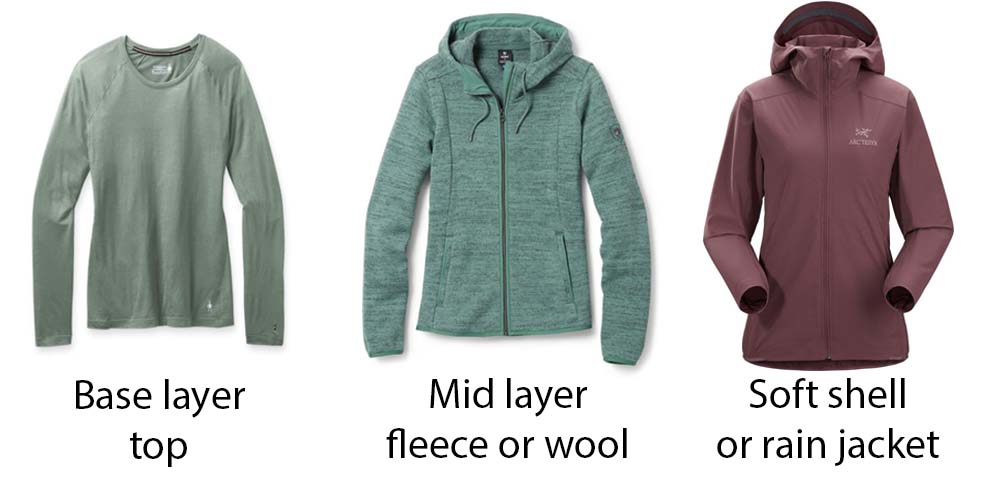
2. Base layer top
Mine is a breathable synthetic athletic shirt that I got in a secondhand store. If you can afford it, there’s nothing like Merino wool base layer tops.
3. Mid layer top
I wear either a fleece hoodie or my amazing wool hoodie (also got it at a secondhand store). How thick should your mid layer be? In very cold weather, you’ll want something very thick. If you will be very active, then you don’t need as much insulation. If it’s not too cold an you will be very active, you might just want a vest.
Don’t wear down as your mid layer. It gets wet easily, won’t insulate when wet, and takes forever to dry. Wool is much better, especially if you aren’t practiced at staying dry in the rian.
4. Shell jacket
You’ll need either a rain jacket or a soft shell jacket. If I will be hiking or very active, then I prefer a soft shell because it is more breathable. If it will be pouring rain and I will mostly be sitting around, then a rain jacket is better. If your rain jacket is thin, then wear an extra thick mid layer.
Bottom Layers

5. Underwear
I used to just wear my normal cotton underwear. I’ve recently become a full-fledged material snob though and now have fancy Merino underwear.
6. Base layer bottom
These wick sweat away from your legs and crotch. They should fit snug and be made from Merino or synthetic materials. If you don’t have long johns, tights will work. You can also wear tight-fitting athletic or exercise pants.
7. Insulating layer (Optional)
Your legs don’t lose heat as much as your core, so you probably don’t need a insulating pants unless it is very cold OR you aren’t being very active. I have a nice pair of fleece pants for these situations. For extreme cold, you’ll need puffer pants.
8. Shell Layer
This layer protects you from water and wind. Choose water-resistant (soft shell) pants if you will be very active or the rain isn’t very intense. If the is lots of rain and mud, then you’ll want fully waterproof rain pants. Here are my favorite rain pants for women, best kids rain pants, best baby rain suits and best toddler rain suits.
Hands

9. Liner gloves
These need to be very thin. If you don’t have liner gloves, biking gloves will work.
10. Insulated shell gloves or mitts
In rainy weather, you probably don’t want to deal with an insulating layer on your hands (it’s hard to do camp tasks in fluffy gloves!) Instead, get gloves or mitts that have built-in insulation. Bonus points if your gloves have hooks so you can attach them to your jacket. Otherwise you’ll take them off and forget where you put them (like I was constantly doing).
Also read: Cold-weather glove layering system
Taking the kids camping for the first time?
My “Your Family’s First Camping Trip” bundle has the complete guide, printable packing checklist, and three done-for-you itineraries everything from booking the site to the drive home.
Head
11. Ear warmer or buff
I’ve got a cool buff that keeps my hair out of my face. I wear it over my ears to keep them warm. A lot of people wear the buff over their ears and neck at the same time, meaning they don’t need a separate scarf. I find it more comfortable to wear a separate scarf though.
12. Brimmed hat
I wear glasses, so a brimmed hat is a must for me. Without the hat, water gets all over my glasses and I can’t see. If your jacket hood has a built-in visor, then you might not need this.
13. Jacket Hood
This will keep your head dry.
14. Scarf
I got a real keffiyeh in Hebron, Palestine. I love that thing. But any scarf will do. Bonus points if it is a quick-dry material.
Feet

15. Liner socks
Liner socks move moisture away from your feet so you don’t get blisters. These need to be made from a thin, quick-dry material. Merino or synthetics materials are best.
16. Insulating socks
These will keep your feet warm. Wool is the best material for this layer, though some synthetics work well too. If your boots are insulated, you may be able to skip these socks.
Also read: Best cheap hiking socks
17. Waterproof boots
When camping in really muddy weather, I wear rubber boots. Tip: Put an insert in your rubber boots. The extra layer of insulation from the ground will keep your feet warmer.
Camping Clothes FAQ:
What should you NOT wear camping in the rain?
Cotton in any layer. Cotton absorbs water, loses all insulating ability when wet, and takes hours to dry. In cold and rainy conditions this is genuinely dangerous, not just uncomfortable. This applies to jeans, cotton hoodies, cotton base layers, and cotton socks. If it has a cotton content above about 20%, leave it at home for wet camping.
How many layers do you need for cold weather camping?
Three for the core: base layer (moisture-wicking), mid layer (insulating), shell (waterproof/windproof). For the legs: base layer plus shell pants is usually sufficient since legs generate more heat than the torso. Hands and head need their own layering these are where you lose heat fastest and where adding or removing a layer has the biggest effect on comfort.
Is a rain jacket or soft shell better for camping?
Depends on the conditions. A soft shell breathes better and is more comfortable for active hiking in light rain. A waterproof hard shell keeps you dry in heavy rain but traps more sweat. If you’re mostly sitting at camp in a downpour, hard shell. If you’re hiking in drizzle, soft shell. Many experienced campers carry both.
Do you really need Merino wool for camping?
No, but it helps. Merino regulates temperature better than synthetic, doesn’t smell as quickly, and feels better against skin on multi-day trips. Affordable Merino brands (Meriwool, Lapasa) close the price gap considerably. If budget is tight, a good synthetic base layer is fine — just change it and air it out more frequently.
What boots are best for muddy camping?
Rubber/Wellington boots for serious mud they’re fully waterproof, easy to clean, and nothing beats them in truly muddy conditions. Their weakness is insulation and ankle support on rough terrain. For mixed conditions (some mud, some trail), a waterproof hiking boot with gaiters is more versatile. The key for either is wool socks, not cotton.
Below are some pictures of how I look with all my layers on. It was in the low 40s at camp. We were building some things at camp so got very muddy and dirty! And, yes, I made a fire in the rain.

How I looked when my husband came to pick me up.


Pin this!


