Last Updated on 10/2026 by Mom Goes Camping
My friends all know that I love insects. Even my daughter loves insects and has no problem picking up insects when we are hiking, camping, or just walking around the city.
Read more about camping around insects below:
The truth is that insects are greatly underappreciated. Insects are…
- Important Pollinators: Many plants wouldn’t be able to pollinate and we wouldn’t have many of the produce we rely on.
- Decomposers: Many insects help break down of waste such as dead animals or plants. Without decomposer insects, it would be a very messy world!
- A Major Part of the Food Chain: Without insects, what would birds, amphibians, and reptiles eat? And, without those animals, what would larger predators eat?
But what about the beauty of insects? I truly believe that fear of insects is not ingrained, but something taught by society. Take my daughter for example. She grew up with me saying that insects are “cute” instead of “disgusting.” She never absorbed the societal message that insects are something that should be stomped out of existence.
All insects are fascinating in their own way. From ants who communicate with pheromones and live in highly-organized colonies to bees that dance to communicate to cicadas with their 17 year life cycle…
Start looking closely and you too will see how amazing insects are. For starters, check out these incredibly strange, beautiful insects that can be found in the USA.
Slug Moth Caterpillar

Why It’s Beautiful: These caterpillars which are part of the Limacodidae moth family are beautiful – just don’t touch them. They have venom in their spikes and the sting leaves a painful itch.
Red Saddlebag Dragonfly
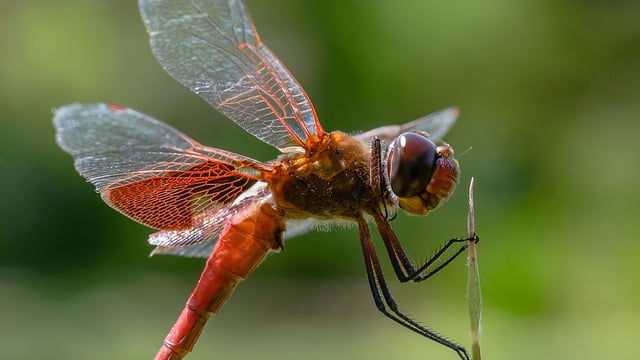
Why It’s Beautiful: Dragonflies were the first winged insects to evolve. So, looking at them is like looking 300 million years into history. The translucent wings on the red saddlebag make it particularly beautiful.
Pandorus Sphinx Moth Caterpillar

Why It’s Beautiful: Because its alien shape and eyespots are fascinating.
Oak Treehopper

Why It’s Beautiful: These insects come in many different bright colors and some of them have horns.
Orange Assassin Bug
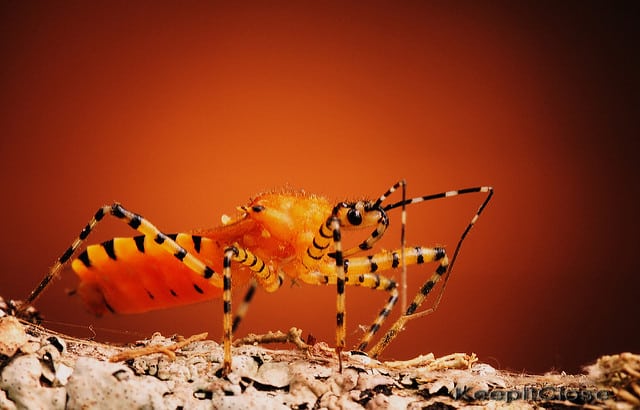
Why It’s Beautiful: This brightly-colored insect uses its long, curved proboscis to kill other insects.
Carpet Beetle

Why It’s Beautiful: Carpet beetles have colorings much like a 1970’s shag rug. While you wouldn’t want them in your home (they are destructive), you can appreciate the strange plates on their bodies which give them their color patterns.
Hummingbird Moth

Why It’s Beautiful: The first time I saw this moth, I thought it was a hummingbird (and was subsequently confused what a hummingbird was doing in the city). They get their names because they, like hummingbirds, can hover mid-air as they suck the nectar out of flowers with their super-long tongues.
Taking the kids camping for the first time?
My “Your Family’s First Camping Trip” bundle has the complete guide, printable packing checklist, and three done-for-you itineraries — everything from booking the site to the drive home.
Florida Predatory Stink Bug

Why It’s Beautiful: The shimmering color patterns on these insects are gorgeous. They are also very useful insects as they eat insects which damage crops.
Hickory Horned Devil


Why It’s Beautiful: As a caterpillar, the hickory horned devil tricks animals into thinking it is dangerous with its bright colors and long “horns.” The giant caterpillar (which can be as big as a hot dog) is actually harmless. It metamorphoses into the regal moth – the largest moth north of Mexico.
Saddleback Moth Caterpillar

Why It’s Beautiful: The contrasting colors, bright eye spot, and long spikes on this caterpillar make it a feast for the eyes. Just don’t touch because those spikes do cause a sting!
Thorn Bug

Why It’s Beautiful: Closely related to the Oak Treehopper, this insect also has beautiful colors. When on a plant stalk, it looks like a thorn.
Eastern Lubber Grasshopper

Why It’s Beautiful: This is a distinctive species of grasshopper found throughout the Southeastern parts of the USA. The colorings help you see the many body armor plates of the grasshopper and realize how amazing their construction is.
Glasswinged Butterfly

We all agree that butterflies are beautiful, so I decided to choose a very distinct species for this list. Transparency is rare in butterflies as most use their colors and markings to ward off predators. The glass winged butterfly instead uses its transparency to hide from them.
Beautiful Insects FAQ:
Why are some insects so brightly colored?
Often it’s a warning. Many vividly colored insects use aposematism, bright colors that signal to predators “I’m dangerous, don’t eat me.” The slug moth and saddleback caterpillars on this list are good examples: their striking looks double as a warning about the painful sting in their spikes. Bright colors can also help insects attract mates or, surprisingly, camouflage them against colorful flowers and tropical plants.
Are colorful insects poisonous or dangerous?
Sometimes, but not always. Bright coloring is a clue worth respecting — the saddleback and slug moth caterpillars really can sting. But plenty of beautiful insects, like the glasswinged butterfly and hummingbird moth, are completely harmless. The safest rule outdoors is to look, photograph, and not touch unless you know what you’re looking at.
Where can you find these insects in the USA?
Most on this list live across North America, with several concentrated in the warmer Southeastern states, the eastern lubber grasshopper and Florida predatory stink bug are both Southern species. You don’t need to go deep into the wilderness to find them. Keep an eye on tree trunks, leaves, and flowers on your next hike or even a walk around the neighborhood.
Is it safe to touch a caterpillar?
Not always. Fuzzy or spiky caterpillars in particular can have venomous spines, the saddleback and slug moth caterpillar on this list are both examples where the sting is genuinely painful. Smooth-skinned caterpillars are generally harmless. The safest habit is to admire them and photograph them rather than picking them up, unless you’re confident in the species.
How can I get my kids interested in insects?
Start by reframing insects as fascinating rather than disgusting, the language you use shapes how kids see them. Give kids a magnifying glass and a bug jar and let them observe rather than catch. Books with photos of beautiful insects like these go a long way. Once kids see how incredible insects actually look up close, the “gross” reaction tends to disappear on its own.
_______________________________________________________________________
Image credits:
“Living, Isa textula (Poisonous), Hebron” (CC BY-NC 2.0) by Macroscopic Solutions
“Hickory Horned Devil” (CC BY-NC 2.0) by bionicteaching
“Florida Predatory Stink Bug – Euthyrhync” (CC BY 2.0) by judygva (back in town and trying to catch up)
“Greta oto – 365 / 021” (CC BY-NC-ND 2.0) by Traveller_40
“Florida Grasshopper” (CC BY-NC-ND 2.0) by mztery
“Insecto Espina / Thorn Bug / Umbonia cra” (CC BY-NC-ND 2.0) by Carlos De Soto Molinari
“The Assassin Bug….Trick or treat” (CC BY-NC-ND 2.0) by graftedno1
“Pandorus Sphinx Moth caterpillar (Eumorp” (CC BY-SA 2.0) by aarongunnar
“Hummingbird Moth” (CC BY 2.0) by Larry1732
“Saddleback Caterpillar – Oruga Ensillad” (CC BY-NC-ND 2.0) by Andres Rodriguez FOTOGRAFÍA
“Anthrenus verbasci (Linné, 1767)” (CC BY-SA 2.0) by urjsa
“Red Saddlebags – Tramea onusta ♂” (CC BY-NC-ND 2.0) by Cletus Lee
“Platycostis vittata (Oak Treehopper)” (CC BY-NC 2.0) by Boy of the Forest
“Regal Moth” (CC BY-NC 2.0) by nessiegrace